White banner with a pale blue horizontal line across the center.

Tips for Delivering a Eulogy

Serenity Funeral Home of Southern Utah • June 15, 2026

Delivering a eulogy at a funeral or memorial service is both an honor and a responsibility. Today we’re providing some tips and ideas to consider.

A proper eulogy should:

  • Honor the deceased
  • Reflect the deceased’s character and values
  • Provide comfort and meaning to those in mourning

Eulogies usually consist of:

  • A brief introduction and your relationship to the deceased
  • Two or three meaningful stories, traits, or examples
  • A closing reflection, lesson, or farewell

The length guideline of a eulogy is generally five to seven minutes. Unless instructed otherwise by the family, shorter is usually better.

A eulogy is not a reading of the obituary, nor is it intended to be a full biography. When selecting content, consider the following:

  • Warmth and gentle humor are acceptable if natural and respectful
  • Make it personal – describe what the deceased meant to you
  • Avoid negativity, controversy, or unresolved family dynamics

Losing your composure briefly is human – it is appropriate to have emotions arise.

When writing a eulogy, consider the following tips:

  • Write the eulogy in full, even if you plan to speak naturally
  • Practice aloud several times
  • Bring a physical copy printed in a large font – do not rely solely on memory

When delivering a eulogy, consider the following tips:

  • Speak slightly slower than normal
  • Pause between thoughts
  • Breathe intentionally if emotions surge – silence is acceptable and the audience will wait

Remember that the family and/or the audience is not judging your speaking ability. Instead, they are seeking recognition of the person they loved, validation of their grief, and a moment of shared remembrance.

If you have questions concerning the preparation of a eulogy, please contact us at (435) 986-2085.

.

Follow us on Facebook and Instagram @SerenityFuneralSTG

By Serenity Funeral Home of Southern Utah • July 22, 2026
According to CDC data from 1999 to 2014, more deaths occur on a Saturday than any other day of the week. A look at how causes of death vary by day.
By Serenity Funeral Home of Southern Utah • March 24, 2026
“Re-grief” refers to the renewed experience of mourning a loss that was previously grieved. It is a normal and healthy process — grief is an experience, not an event.
By Serenity Funeral Home of Southern Utah • December 10, 2025
Looking for ways to contribute to your community this holiday season? Simple but effective ideas for volunteering your time, donating goods, and spreading cheer locally.
By Serenity Funeral Home of Southern Utah • September 9, 2025
Embalming has been practiced for thousands of years. In modern culture it serves three purposes — to sanitize, preserve, and present the body.
By Serenity Funeral Home of Southern Utah • August 12, 2025
“Blue Zone” is a term for geographic regions home to some of the world’s oldest and healthiest people. The five known Blue Zones and what their residents have in common.
By Serenity Funeral Home of Southern Utah • July 8, 2025
Dr. Alan Wolfelt writes that although everyone grieves differently, there are “six needs of mourning” everyone should encounter as they move through the grieving process.
By Serenity Funeral Home of Southern Utah • January 22, 2025
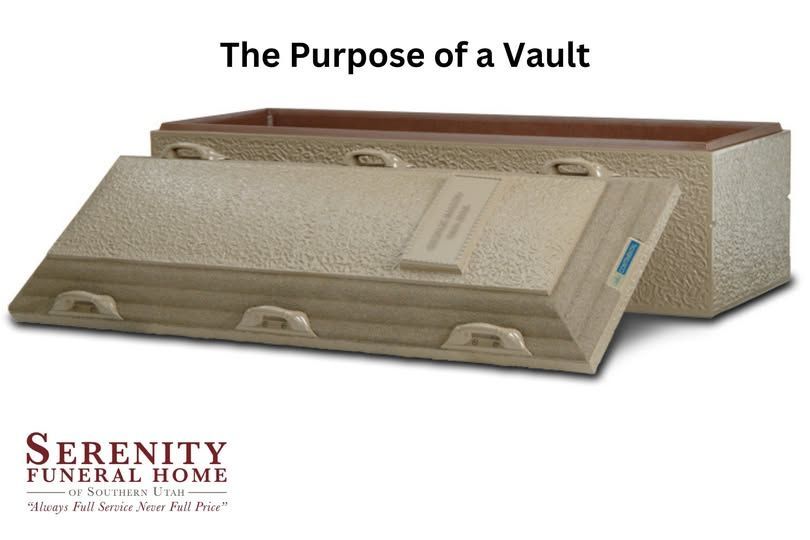
Why is a vault or outer burial container required by most cemeteries? The difference between sealing and non-sealing vaults, and what they protect.
By Serenity Funeral Home of Southern Utah • December 17, 2024
“Just throw me in a pine box.” A funeral director on why funerals do not have to be expensive to be meaningful, and the value of taking time to remember a life.
By Serenity Funeral Home of Southern Utah • October 8, 2024
Who had the most expensive funeral in modern history? The top contenders — and a reminder that your own funeral will cost a fraction of these.

By Serenity Funeral Home of Southern Utah • September 3, 2024
The “birthday effect” is a statistical phenomenon in which a person’s likelihood of dying is higher on, or around, their birthday. Several possible explanations why.
Show More